

Plastic surgery marketing is unlike almost any other category in healthcare—any marketing agency that works with plastic surgeons will attest to that.
Patients aren’t just comparing prices and reviews—they’re evaluating your actual work, even your personality.
The decision to go with a surgeon almost never happens entirely in one channel (Google, social media, billboards, etc).
Most successful plastic surgery practices grow through a multi-touch patient journey: a patient discovers you in one channel, validates you in another, and is nurtured toward booking through yet another, often across weeks or months.
Any plastic surgeon’s marketing strategy that ignores this reality is guaranteed to underperform.
1. The Multi-Touch Patient Journey
At any given point, your total addressable market looks something like this:
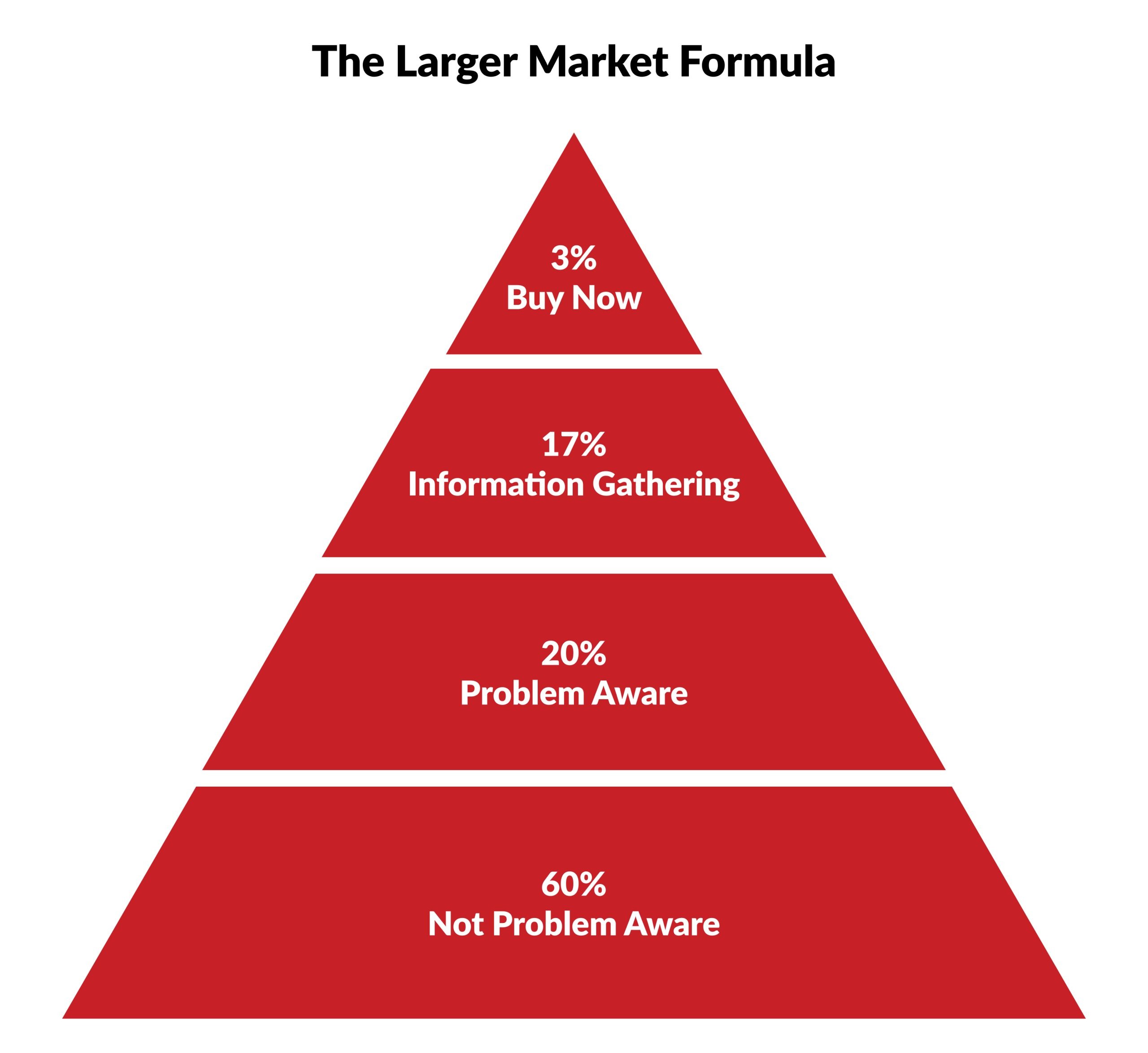
A marketing strategy focused entirely on Google Ads and SEO for “rhinoplasty beverly hills” only has the potential to reach 1%-8% of your potential patients.
Likewise, a Facebook Ads campaign is almost certain to miss the 3% that are ready to book a consultation.
This is why you need a marketing mix.
2. Facebook Ads and Google Ads: The Fast Way to Drive Consults
PPC and Paid Social is often the fastest way to generate demand for a plastic surgeon—but also the easiest way to waste money.
Google Ads has become less effective for many plastic surgery practices due to rising costs, increased competition from large groups and aggregators, and diminishing margins after ad spend.
We’ve found that Facebook and Instagram Ads usually outperform Google when executed correctly because they are capable of getting in front of those patients that are “gathering information” as well as “solution aware,” and in many cases, “solution unaware.”
Facebook and Instagram Ads also allow visual education, and build trust long before a consultation.
Their main criticism is that “the leads aren’t as good.”
However, when surgeons complain about low-quality leads from Facebook, the issue is rarely the platform. It is almost always a problem with positioning, ad creative, the landing page, or some combination of the three.
Both Google Ads and Meta Ads violate HIPAA by default unless configured in very specific ways, and most practices and agencies are not compliant.
As of now, enforcement is currently focused on large organizations, but we think there is likely coming a wave of lawsuits and fines coming over the next decade that will eventually impact successful independent plastic surgeons.
3. SEO Drives A Different Type of Consult
SEO still works.
As a matter of fact, we usually see the lowest cost per patient acquisition from SEO of any marketing channel. Consults that come from organic search tend to be the 3% that are really doing their homework, vs. someone that just clicked on an ad or performed a Google Search on a whim.
However, it’s important to note that things are changing.
Google is moving over to “AI Mode,” which our research has shown delivers diminished visibility for top of page rankings… and increase visibility for positions 2-4.
There also is an increase in use of ChatGPT to find plastic surgeons, which SEO does help with, but that will potentially reduce the ROI of local SEO for.
Effective plastic surgery SEO combines procedure-based keyword mapping, local SEO, and well-structured service pages that are likely to convert (I’ll talk more about this later).
Link building remains important, but link building does not mean link buying. Purchased links may provide short-term gains, but they create long-term risk and rarely establish lasting authority.
As a matter of fact, we’ve seen that Google has gotten quite good at identifying and ignoring paid links in the past 3 years.
4. Content Marketing Educates and Earns Trust for Plastic Surgeons
People do not read the way they used to.
Text content now plays a supporting role by providing SEO structure and depth for motivated patients, while video does the heavy lifting when it comes to earning trust.
Educational videos, procedure explainers, and recovery discussions consistently outperform long-form text alone. Any content strategy that does not prioritize video is already behind.
We had a client increase their leads by a full 64% in one year by employing this video-to-blog approach to content.
5. A High-Converting Websites Is the Cornerstone of Plastic Surgery Marketing
Most plastic surgery websites fail not because they look bad, but because they ignore basic conversion principles.
High-performing landing pages follow a predictable formula:
- First confirming the click so visitors know they are in the right place
- Establishing social proof through reviews, media mentions, or results
- A clear explanation of services
- Thoughtful objection handling
- Finally, an alternative conversion path for those not yet ready to book, such as an invitation to view work on Instagram.
6. Social Media Marketing Is a Must for Plastic Surgeons
Instagram, in particular, is where patients assess aesthetic alignment, credibility, and trust.
Short-form video consistently outperforms static content, not because it goes viral, but because it builds familiarity over time. The goal is not popularity—it is confidence.
Social media is the fastest way to earn trust in plastic surgery marketing.
Surgeon-led education, procedure walkthroughs, recovery expectations, behind-the-scenes clinic content, and long-form YouTube videos all help patients feel informed and comfortable before they ever book a consultation.
Patients are not just choosing outcomes; they are choosing people.
7. Your Positioning and Messaging Are Critical For This to Work
Branding fails when practices try to be everything to everyone.
It is nearly impossible to build a strong brand around every procedure.
Successful plastic surgery brands are built around focus.
Surgeons that clearly position themselves as the expert in a specific procedure stand out, while generalists are forced to compete on price, convenience, or ad spend.
8. Reputation Management and Social Proof
Reviews are not optional. Patients actively cross-check Google, RealSelf, Healthgrades, and social platforms before making a decision.
Effective reputation management is about consistently generating authentic proof and responding professionally when issues arise, not suppressing negative feedback.
They also check your Instagram.
As a matter of fact, Instagram is one of the most common next destinations for patients that discover our plastic surgeons through Google.
Google and ads may be the way they find you, but social media and your reviews are the way they trust you.
9. Email and SMS Marketing for Plastic Surgery
Most patients are not ready to book immediately.
Email and SMS allow practices to nurture long decision cycles, educate without pressure, and remain top of mind.
This is especially important for higher-ticket procedures where timing and confidence matter.
10. Your Marketing Needs a CRM and Email Marketing
As practices grow, systems become as important as strategy.
Marketing automation, CRM-driven follow-ups, AI-assisted lead qualification, and multi-location reporting allow practices to scale without losing consistency or visibility.
11. Tracking, Analytics, and ROI Measurement
Tracking is essential, but it introduces serious risk when handled incorrectly.
Google Analytics, call tracking platforms, and ad tools often collect or share protected health information unless carefully configured.
As far as HHS is concerned, sending data to Google that Patty Smith viewed a landing page on Liposuction constitutes a HIPAA violation
Like paid advertising, analytics tools commonly violate HIPAA by default.
Enforcement may be limited today, but ignoring this risk is not a long-term strategy.
12. Choosing a Plastic Surgery Marketing Agency
Before hiring any agency, review their LinkedIn presence.
Who actually works there matters more than what the sales deck says.
Titles and team composition reveal where a company’s real strengths lie. An agency with deep SEO talent but minimal social expertise will perform very differently than one built for paid media or content. Understanding this upfront prevents mismatched expectations and wasted time.


