

This year in 2025, there were a bunch of SEO trends that arose that I think most people haven’t noticed.
In this article, I’m going to share with you seven SEO tips for 2026 based on those trends.
Tip #1: Focus on Firsthand Experience
Number one, focus your entire content strategy on topics where people want firsthand experience.
Look, a search like “What does basal cell carcinoma look like?”
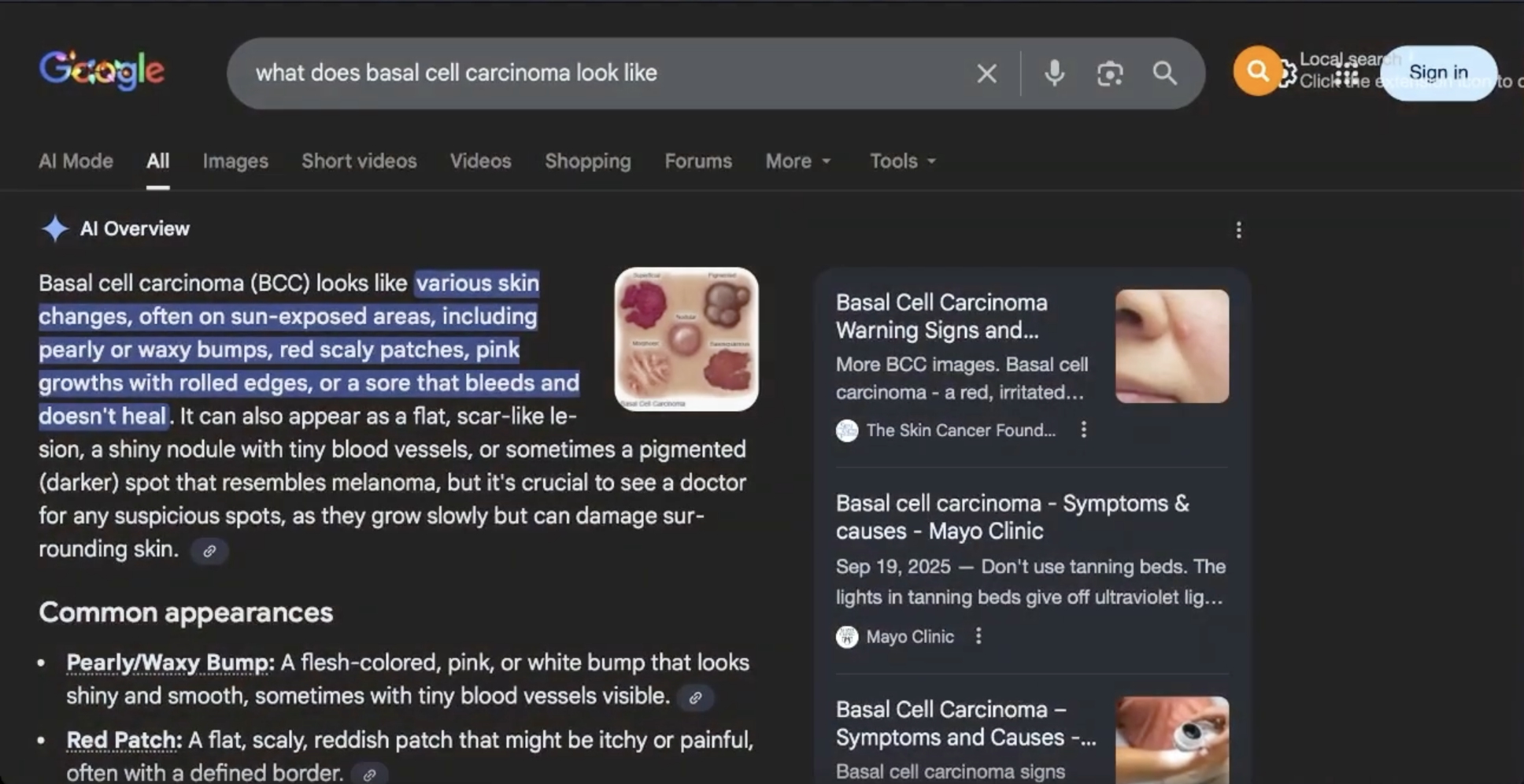
Honestly, AI can answer that and that traffic isn’t coming back.
Then you have topics like “How soon will I see results from microneedling,” where there’s a good chance that you are not going to be satisfied with an AI answer:
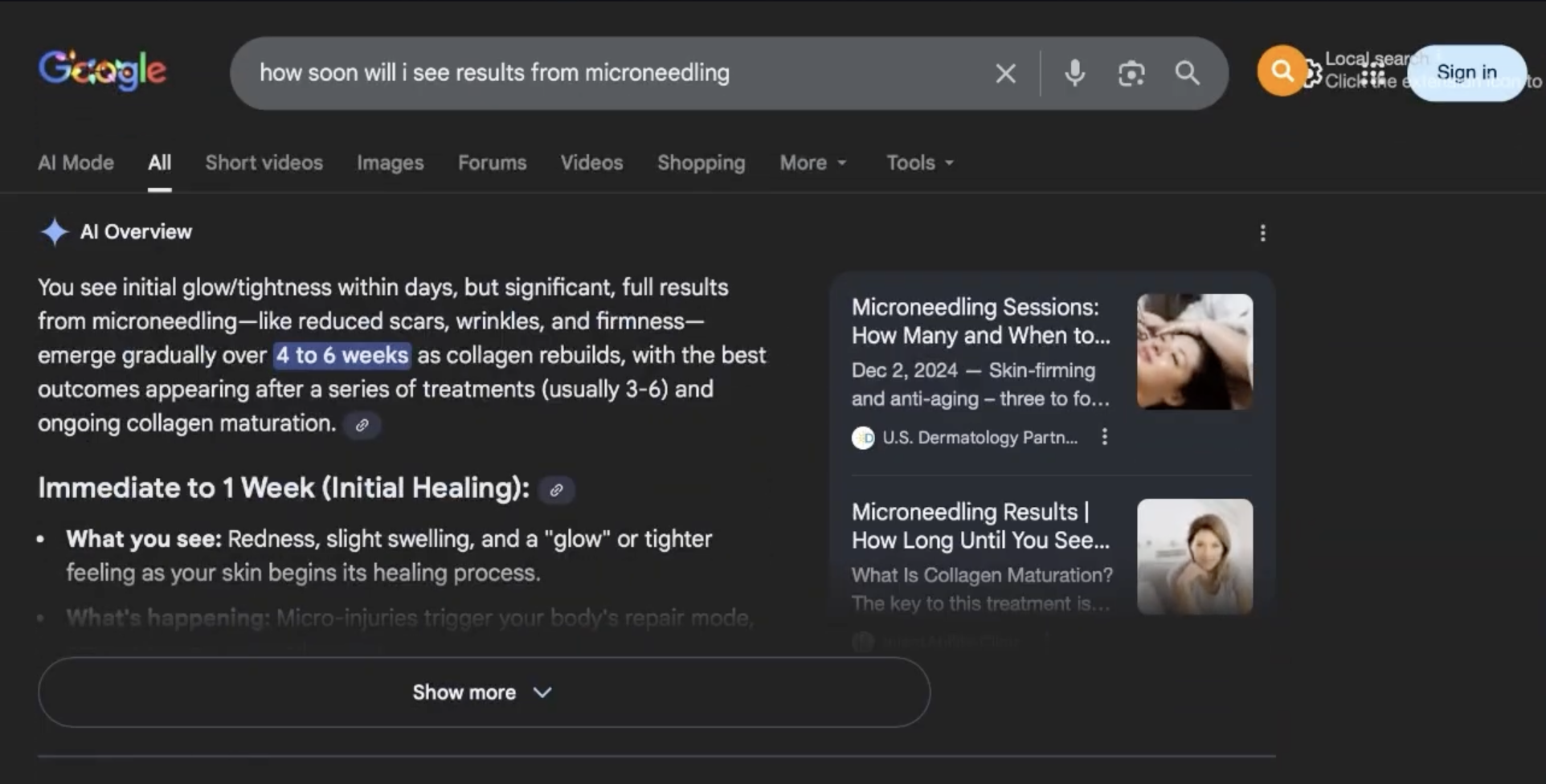
In other words, where you’re going to want to hear from an actual dermatologist or people that have gotten microneedling.
As you are writing content, as you’re planning content, pick the topics where people want to hear your firsthand perspective and your experience, not where they want the cold hard facts.
Tip #2: Maximize User Signals
Tip number two, make a concerted effort to maximize user signal.
One thing we learned this year is that Google is collecting Chrome data and it seems to have some sort of popularity signal that is part of all of Google’s ranking systems:
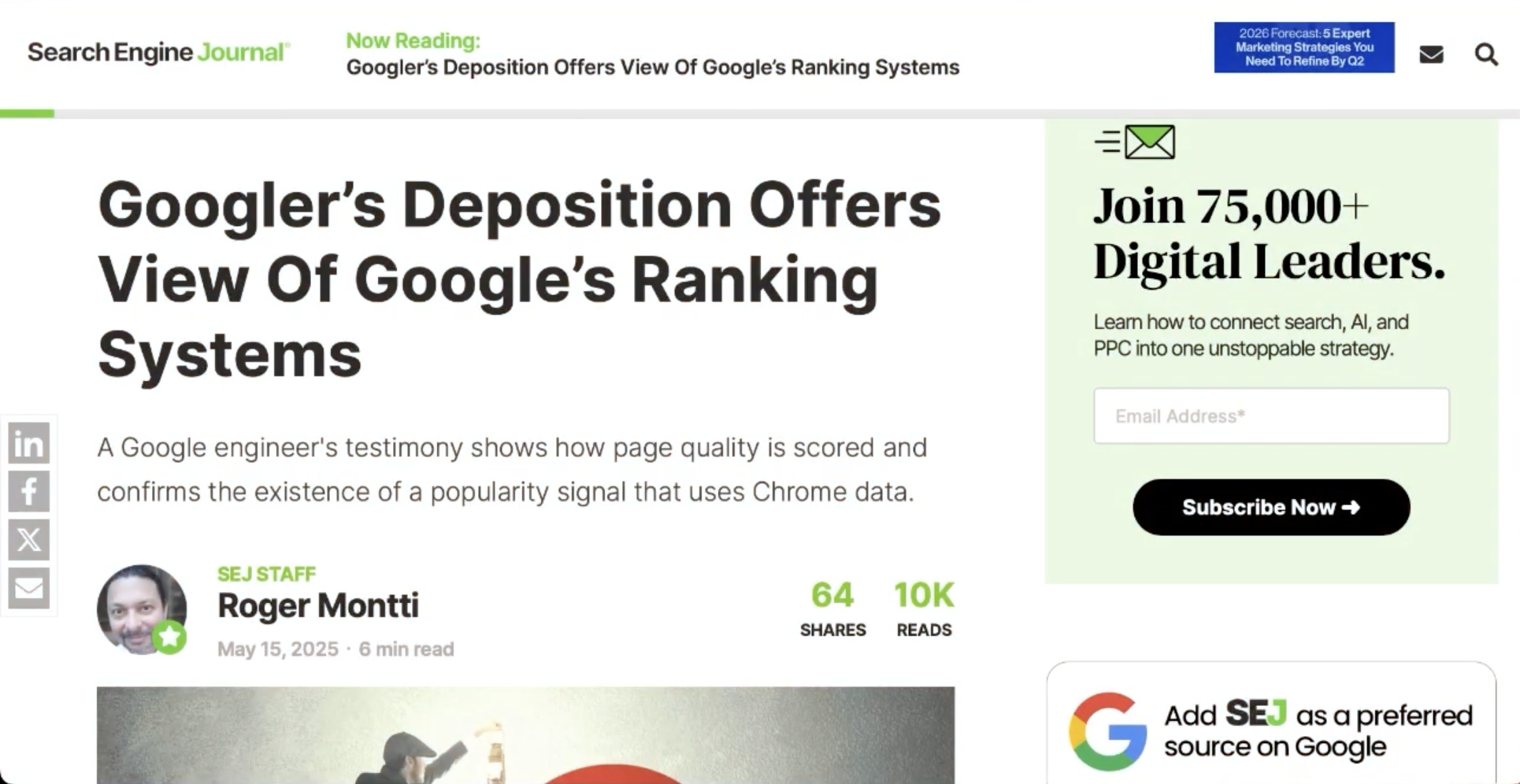
You should consider the user experience as something that’s going to help your SEO or hurt it if you get it wrong.
How human beings react to your website pages, to your content, will impact your search rankings.
Tip #3: Leverage First-Party Data
Tip number three, start leveraging first-party data.
Odds are you have data from your business and you could be writing content that you could then use to try to acquire links.
That, on a complete side note, could also help with your social media.
And that, when done consistently, could actually drive some of those positive user signals like I mentioned in tip number two.
You are sitting on this data.
Start writing about it, start producing content about it, and do outreach.
Tip #4: Ditch Keyword Optimizers
Tip number four, throw out all of these keyword optimizers.
They don’t really do much.
At the beginning of the year, we did a test and we got rid of these reports that were telling us to add all kinds of keywords to the content.
And the truth is, as soon as we stopped doing this, our pages did not rank any more poorly.
It’s an unnecessary expense.
What they’re telling you to do would have worked before BERT, and Google’s systems have become much more sophisticated than these tools would lead you to think.
Tip #5: Incorporate Video
Tip number five, incorporate video into your blogs.
Instead of just writing blogs, which frankly take forever, most of the time the person that’s writing it is not an expert on the topic.
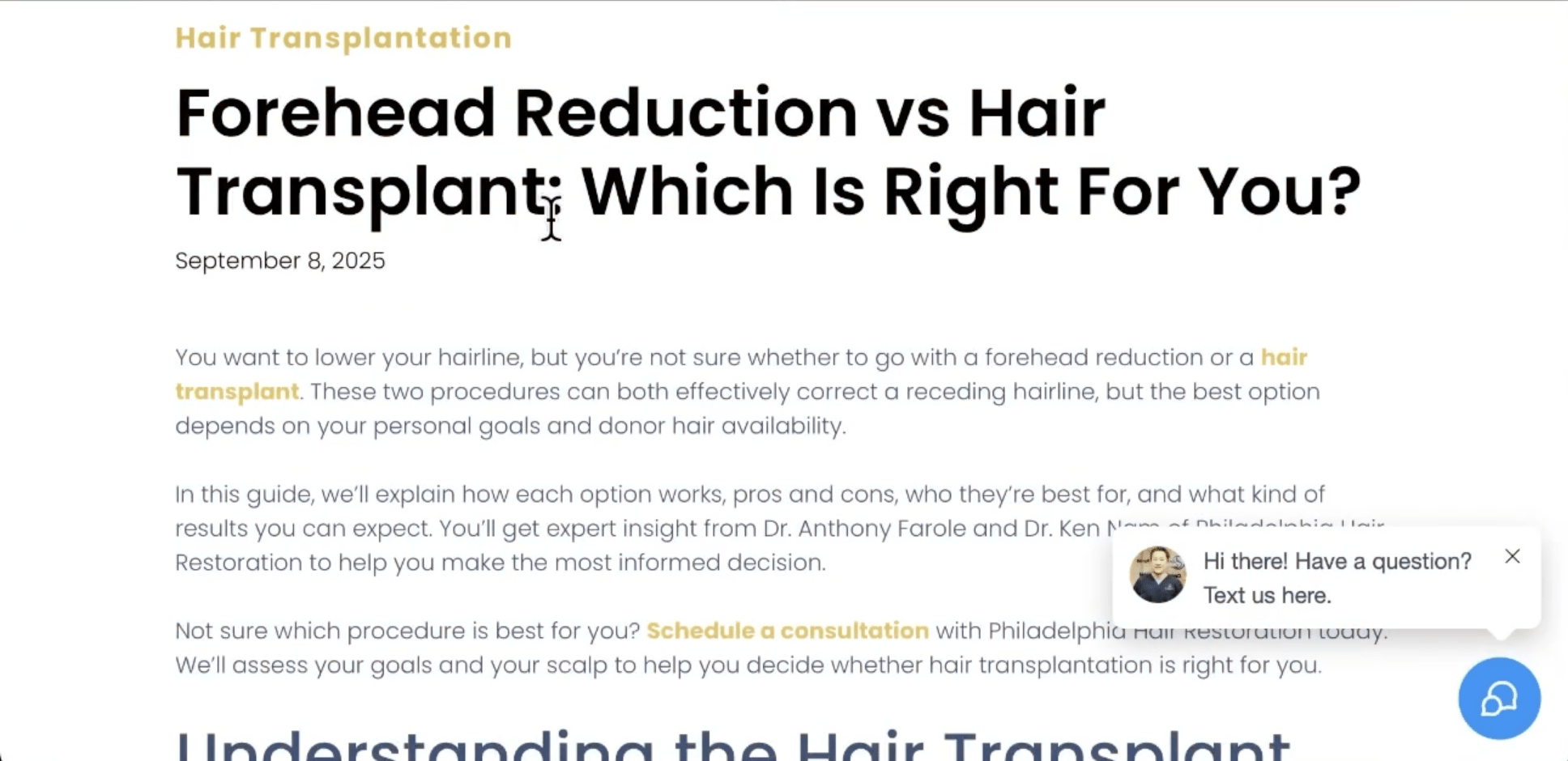
I want you to take those outlines and shoot video instead.
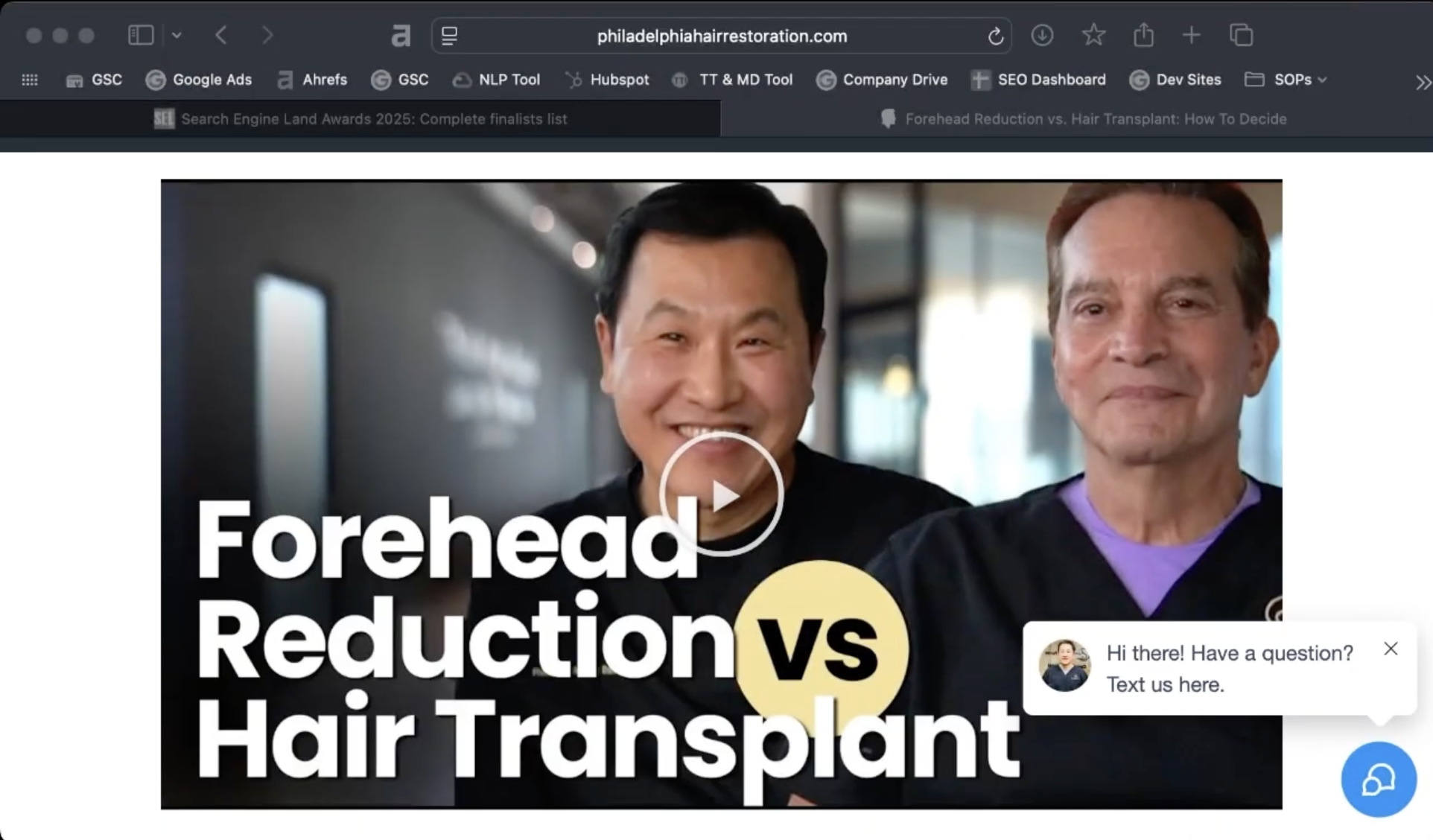
Like honestly, you need this text on the page in order to rank, but the goal really should be to get people to click on the video and actually watch it.
Video does a much better job of getting people to know who you are as a brand.
And you’re going to find that this is not only a faster way to produce content, it’s a more effective one if what you’re trying to do is actually drive business outcomes from what you’re producing.
I have an entire video about this.
I’m going to link to it in the description.
Make sure you check it out after this one.
Tip #6: Optimize for ChatGPT
Tip number six, optimize for ChatGPT.
I feel silly even saying this, but I can tell you at this point, Sagapixel is getting more leads from ChatGPT and Gemini and Claude than it is from organic search.
And this is the first time in the history of our company that this has been the case.
Now, there are certain types of businesses, like the home care agencies that we work with, where their customers really have not gravitated towards ChatGPT for finding their services yet.
But it’s starting to happen for the plastic surgeons.
It’s happening for dentists, and there’s a good chance that it’s happening for your industry.
Tip #7: Get the Basics Right
And tip number seven, get the basics right.
Title tags that earn the click, correct schema types, bulletproof internal linking, and avoiding SEO blunders like broken links.
The biggest wins that we see from SEO usually involve just getting the basics right.
